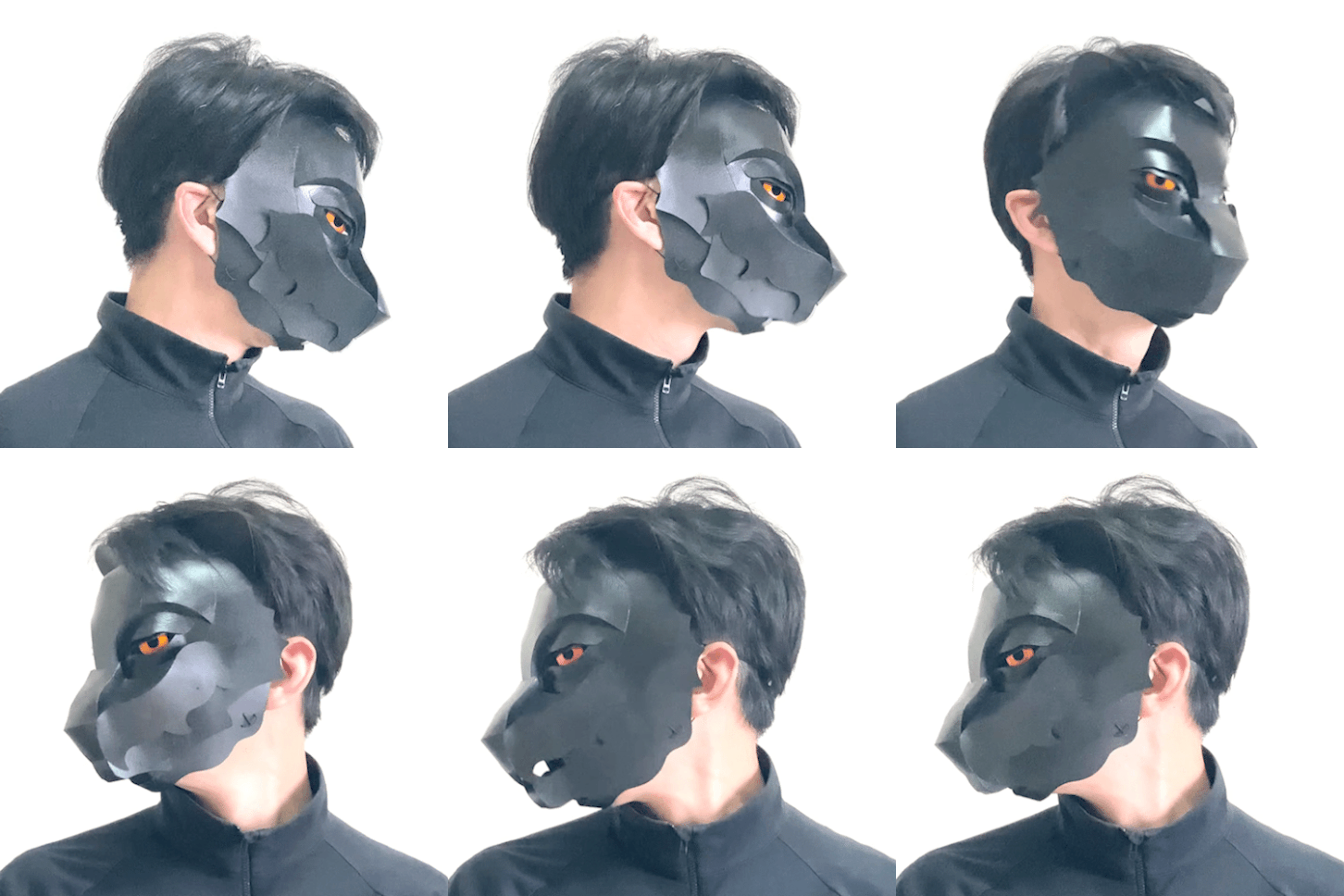
Make Your Own Japanese Mask: The Art of Paper Mask Craft
Paper is not a material people associate with masks. It seems too fragile — too quick to tear, warp, or lose its shape under the heat and humidity of a face pressed against it. Traditional Japanese mask-making uses wood. The great noh masks are carved from hinoki cypress, built up with gofun and mineral paint over weeks of painstaking work. Paper is for origami. Paper is for wrapping.
Hayashi Takeo disagrees.

A Different Kind of Paper Mask
Hayashi Takeo (林たけお) was born in 1965 in Hokkaido. His professional background is in graphic design and lighting design — fields concerned with how images are constructed and how light shapes what we see. He came to mask-making not through the traditional performing arts but through an interest in what paper can do when you treat it as a structural material rather than a flat surface.
The technique he developed is called kyokusen-ori (曲線折り) — curved folding. Where conventional origami works in straight creases and flat planes, kyokusen-ori uses curved fold lines to introduce three-dimensional form into a single sheet of paper. The result is a mask that achieves its shape entirely through the geometry of the paper itself, without cutting or gluing the primary structural surface. The material does the work.
This is not a traditional technique recovered from historical sources. It is a contemporary invention, developed by a working designer applying structural thinking to a material that had, for centuries, been treated as secondary.
The Paper
Hayashi does not use washi. This point matters, because the assumption that any Japanese paper craft will use traditional handmade washi is widespread and, in this case, wrong. His masks are made with modern high-quality paper — selected for specific properties of tensile strength, surface texture, and behavior under folding stress. The choice is deliberate: washi, for all its beauty and historical significance, has characteristics that work against the precision of kyokusen-ori. Modern paper allows the curved folds to hold their geometry more reliably across the range of designs he has developed.
The resulting masks are lighter than they appear and structurally resilient. They can be worn, handled, and displayed without the fragility one might expect from the material.
The Jaw That Moves

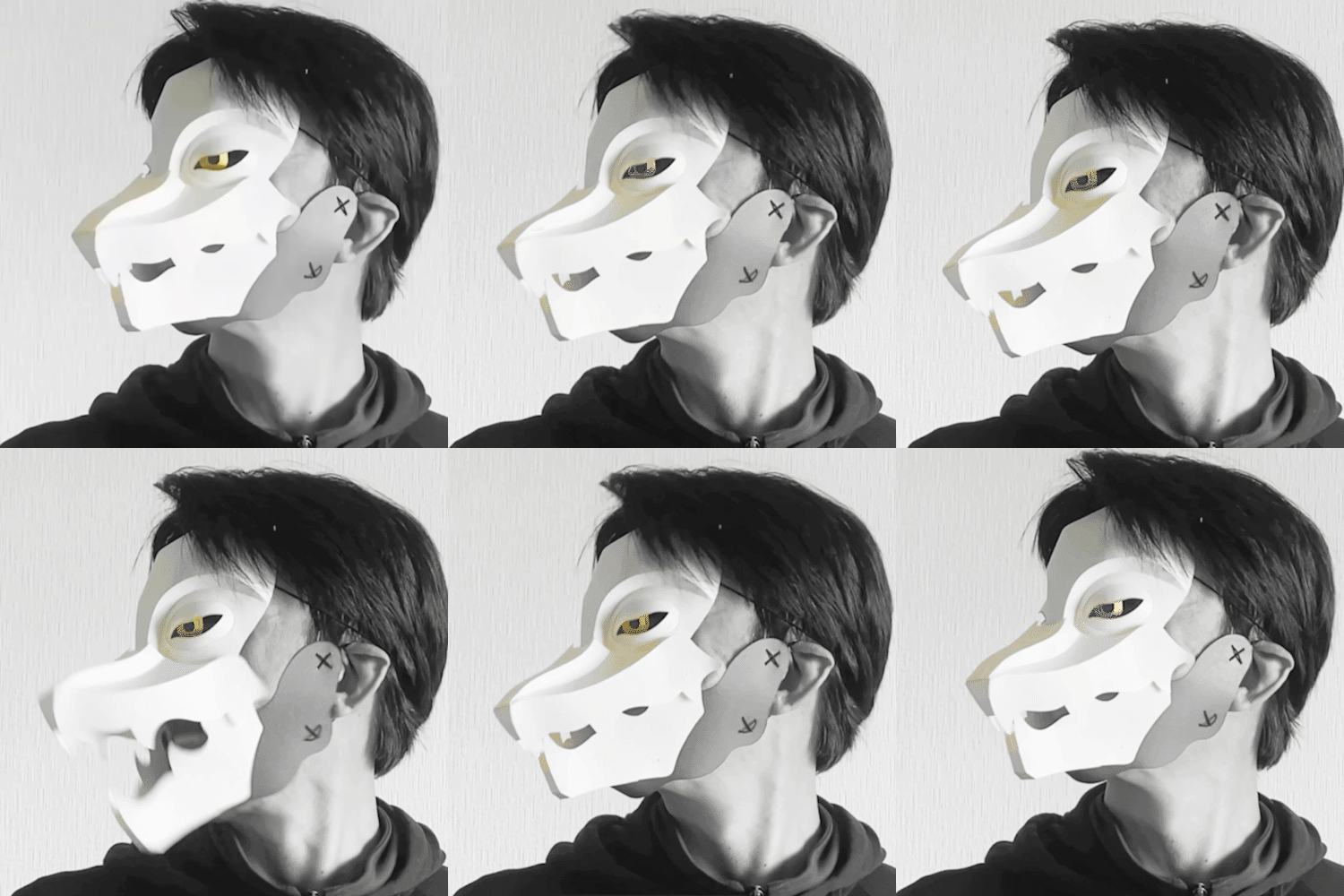
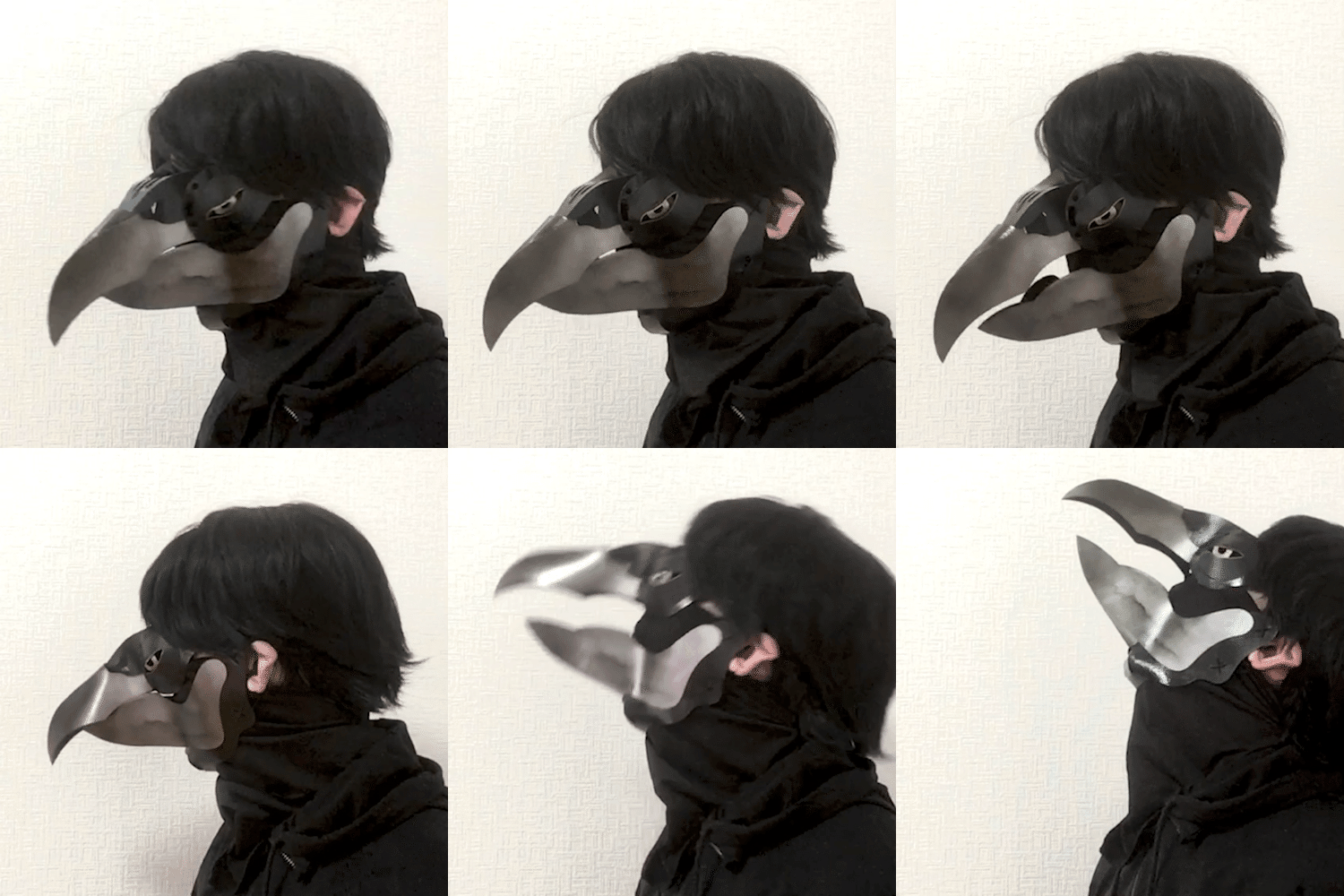
Perhaps the most striking feature of certain Hayashi mask designs is a jaw mechanism that links the movement of the mask to the movement of the wearer's own jaw. When you open your mouth, the mask opens. When you speak or laugh, the mask's expression shifts in real time.
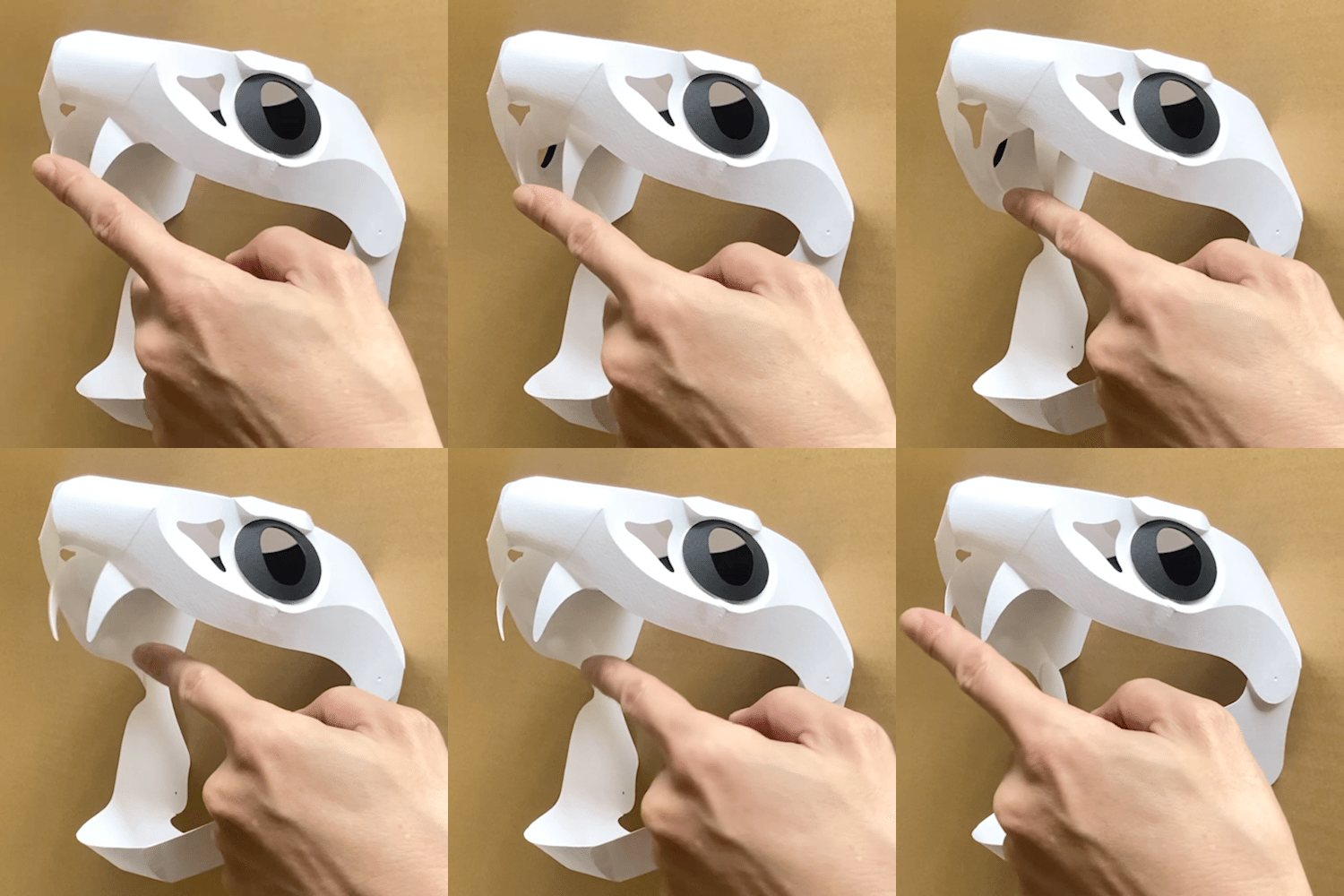
This is not decoration. It is a structural element built into the folding system — the mask's jaw is a separate folded component connected through the paper geometry to the wearer's lower jaw. No electronics, no hinges, no mechanical linkage in the conventional sense. The paper itself transmits the movement.
Nothing in the traditional Japanese mask repertoire works this way. Noh masks are fixed expressions animated by the actor's control of angle and light; bugaku masks are static; festival masks are worn without this kind of physical integration. The moving jaw represents a genuinely new category in mask design, enabled specifically by the structural properties of kyokusen-ori.
A Range of Designs

Hayashi has developed a growing collection of mask designs. The range spans the breadth of Japanese visual tradition and then some: fox (kitsune) and tanuki masks that reference shrine festival aesthetics, skeleton faces that sit somewhere between traditional gashadokuro imagery and contemporary graphic design, and fully invented characters that carry no historical reference at all — including designs best described as cyberpunk, in which traditional mask forms are reconstructed through a contemporary visual language that would be unrecognizable to any historical craftsman but immediately legible to anyone shaped by post-1980s Japanese visual culture.
The fox designs are particularly notable for the way they handle a visual problem that has occupied Japanese artists for centuries: how to make a stylized animal face that reads as sacred rather than simply decorative. The kitsune masks in this range carry both qualities simultaneously. They are objects you could wear to a matsuri, hang on a wall, or give as a gift — and they carry something of the weight of what a fox mask is supposed to mean, even in paper, even made by a graphic designer from Hokkaido.
Workshop Programs
Hayashi teaches kyokusen-ori mask-making in workshop settings. The workshops are not primarily aimed at art students or craft specialists — they are designed to be accessible to anyone curious about what paper can do. Participants fold their own masks from prepared sheets, with guidance on the curved crease techniques that give the design its form.
The workshop format is central to how this work exists in the world. Unlike a noh mask, which is made by a specialist over weeks and worn only by trained performers, Hayashi's masks are designed to be made by the person who will wear them. The act of making is part of the point. When you fold the paper into the shape of a face, something shifts in your relationship to the object. It is not a purchase. It is not a replica of something ancient. It is something you made, with your hands, from a flat sheet, in an afternoon.
Paper as Transformation
Masks in Japan have always been understood as transformation objects. The noh actor who puts on a mask is not performing a character — they are, in the traditional understanding, temporarily becoming something other than themselves. The mask enables that shift. It is a technology of transformation.
Hayashi's paper masks work differently, but the underlying logic is not so far removed. When you fold a sheet of paper into a fox's face, then put that face over your own, something about the relationship between maker, material, and identity becomes genuinely strange in the best possible way. You made this thing. Now it is making you into something else.
That the material is modern paper rather than cypress wood, that the technique was invented in the twenty-first century rather than the fourteenth, that the designer came from graphic design rather than noh — none of this diminishes what the mask does. If anything, it clarifies it.
A mask is a mask. Paper is enough.
Shop Paper Mask Kits by Hayashi Takeo
All Hayashi Takeo masks are designed to be cut, folded, and assembled from A4 paper — no special tools needed. Each kit includes full-size printed templates and step-by-step instructions.
- Kitsune Fox Mask Kit
- Kitsune no Agito – Full-Face Fox Mask Kit
- Snake Mask – Articulated Jaw Kit
- Tanuki Mask Kit
- Lycanthrope Werewolf Mask Kit
- Panthera Cat Mask Kit
- Browse All Papercraft Kits →
Explore the series: Japanese Masks: A Complete Guide to Types, History, and Meaning
Related guides: The Kitsune Mask · The Oni Mask · The Hannya Mask · Noh Masks
Read next: How to Choose a Kitsune Mask · Which Japanese Mask Should You Buy?
About KAMENYA OMOTE
This article was written by KAMENYA OMOTE, Japan’s only shop specializing exclusively in masks. Our physical store is in Kyojima, Sumida, Tokyo (open weekends, 13:00–18:00), and we ship worldwide to 38 countries. The paper craft mask kits in our collection are the work of paper-craft artist Hayashi Takeo. Our “That Face” hyper-realistic mask project has been covered by Reuters and the BBC, and we organize TOKYO MASK FESTIVAL, a mask exhibition event. See Press & Media · About the Shop · FAQ