Which Japanese Mask Should You Buy? A Guide by Use
The right Japanese mask depends less on which tradition you find most interesting and more on what you're actually going to do with it. A mask bought to sit on a shelf, one bought to wear through an entire event, one bought as a gift, and one bought to make a serious visual statement are four different purchases — even if two of them turn out to be the same object. This guide sorts our current mask categories by use, so you can start from what you need rather than working backward from a list of names.

Buying a mask to display?
If the mask is going on a wall or a shelf rather than on your face, painted craft objects hold up best. Our kitsune fox masks are made using habutae-bari, a traditional technique where thin layers are built up over a mold and finished by hand — the painted surface and defined shape read well from a distance, and the object itself is stable enough to display indefinitely without special care. Bold, high-contrast designs tend to work better as display pieces than very delicate ones, simply because they carry from a few feet away.
If you want the wider context — how fox masks relate to noh-style pieces, oni, hannya, and the rest of Japan's mask traditions — that's covered in depth in our complete guide to Japanese mask types, history, and meaning. This article is about choosing from what's in front of you; that one is about where it all comes from.
Buying a mask to wear for hours, not minutes?
Comfort over a long event rules out anything heavy or fully enclosed. A half-face kitsune mask, which leaves your mouth and jaw free, is the more practical choice if you're planning to talk, eat, or drink while wearing it — a dinner, a long party, a full evening out. Full-face designs give a stronger transformation but are better suited to shorter wear or photography, where a few hours of reduced visibility and airflow isn't a problem.
Buying for a festival, costume, or performance?
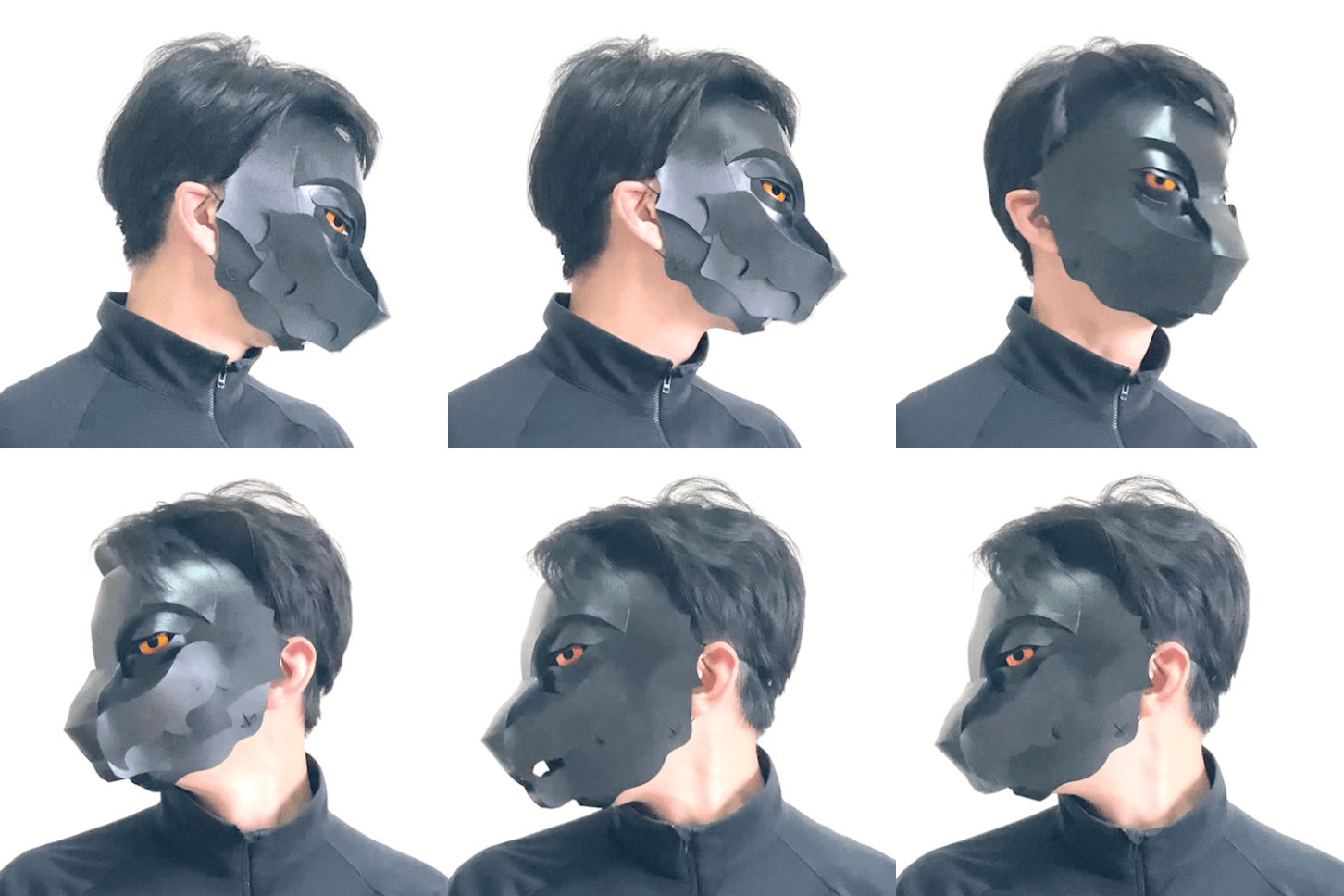
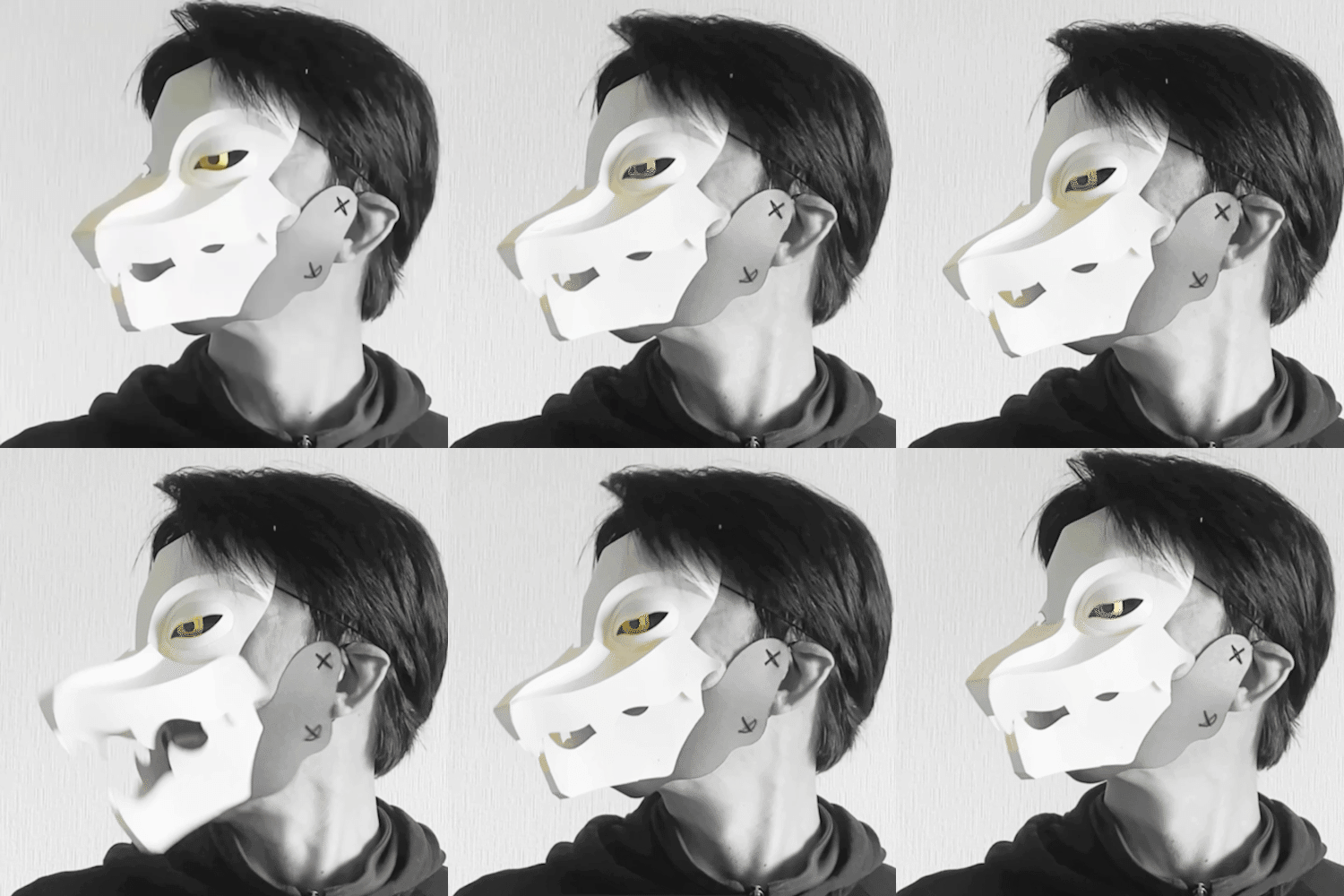
This is where our paper craft kits earn their place. Designed by the contemporary paper artist Hayashi Takeo and assembled by you from flat paper using a curved-folding technique, they're lightweight, pack flat for travel, and cover ground well beyond kitsune — the lineup includes wolf, snake, cat, crow, and other creature designs alongside traditional fox faces. For a costume or event where you need something distinctive, durable enough for a night of movement, and not fragile in a bag, these are usually the better fit over a heavier painted mask.
A habutae-bari full-face kitsune mask is the other strong option here, particularly for festival contexts where the mask itself is meant to be part of a traditional look rather than a costume built from scratch.

Buying as a gift?
Paper craft kits work well as gifts specifically because they're not finished objects — there's an experience built into the box, whether the recipient assembles it themselves or you do it together. For a gift that's ready to display or wear immediately instead, a kitsune mask is the safer choice: it arrives complete, and the range of colors and motifs (cherry blossom, dragon, peacock, and others) gives you room to match a specific person's taste without needing them to do anything once it arrives.
Buying as a serious, one-of-a-kind statement piece?
Nothing in our catalogue is more of a departure from traditional mask-making than our That Face collection — hyper-realistic masks reproducing real human faces, made to order and dispatched in about three weeks. These are not festival pieces or folk craft; they're built for people who want the strongest possible transformation, for performance, film, photography, or as a standalone art object. Because each one is made to order rather than pulled from stock, plan for the longer production window if you're buying for a specific date.
Still deciding between categories?
As a rough rule: choose a kitsune mask if you want a finished, traditional Japanese object you can wear or display right away; choose a paper craft kit if you want to build something yourself, need it to travel light, or are shopping for a gift with an experience attached; and choose That Face if realism and transformation matter more than tradition or timeline. All three ship worldwide from Japan with tracking to 38 countries and regions; listed prices include Japanese tax, but any import duty or tax charged on arrival is the recipient's responsibility.

FAQ
Which is faster to receive: a kitsune mask, a paper craft kit, or a That Face mask?
Kitsune masks are sourced weekly from the maker Komendo and typically dispatch within one to two weeks when in stock. Paper craft kits ship in our weekend processing if already in stock, or in about two weeks if freshly made to order. That Face masks are made to order and take the longest, at roughly three weeks.
Do you sell noh, oni, or hannya masks directly?
Our current selection centers on kitsune fox masks, paper craft kits, and That Face hyper-realistic masks. If you're researching noh, oni, hannya, or the broader history of Japanese masks, our complete types-and-history guide covers those traditions in depth even where they aren't part of our current catalogue.
Can I order more than one category in a single order?
Yes — orders with multiple items ship together once everything is ready. If you combine a faster item with a slower one, such as a kitsune mask with a That Face mask, the whole order will wait for the slower piece, so consider ordering separately if timing matters.